This oral history interview is an intimate conversation between two people, both of whom have generously agreed to share this recording with Oral History Summer School, and with you. Please listen in the spirit with which this was shared.

This interview is hereby made available for research purposes only. For additional uses (radio and other media, music, internet), please inquire about permissions.

All rights are reserved by Oral History Summer School.

Researchers will understand that:

  • Oral History Summer School abides by the General Principles & Best Practices for Oral History as agreed upon by the Oral History Association (2018) and expects that use of this material will be done with respect for these professional ethics.
  • Unless verbal patterns are germane to your scholarly work, when quoting from this material researchers are encouraged to correct the grammar and make other modifications maintaining the flavor of the narrator’s speech while editing the material for the standards of print.
  • All citations must be attributed to Oral History Summer School:
    Narrator’s Name, Oral history interview, YYYY, Oral History Summer School
Library

Richard Koweek

May 27, 2026

|

Hudson, NY

Song

Recorded by

Jess Shane

This interview is available in-person only. Please get in touch if you would like to listen.
Is this your interview?
Click here to respond.
x
Summary:

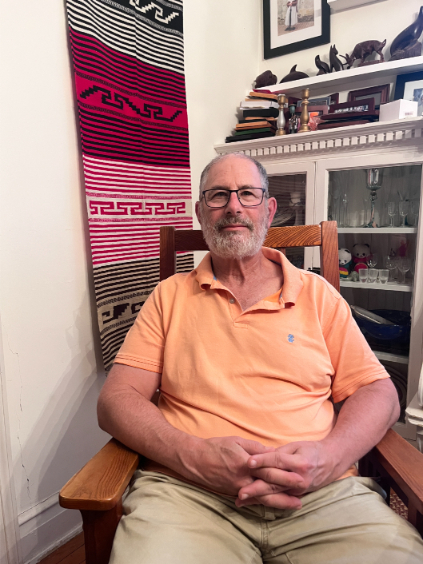
This interview was conducted with Judge Richard Koweek on Thursday, May 28th in his living room. Richard Koweek is a lifelong Hudson resident, former Columbia County Court Judge, Eagle Scout, father, grandfather, husband, and community volunteer. Koweek grew up on the 500 block of Warren Street, playing pickup games in Prison Alley and on the fields of what was then Hudson High School, and spending summers at Copake Lake. Starting when he was a child, he worked in his family's toy store on Warren Street (The Town Fair), which his parents ran from 1950 to 2003 before his sister took it over and expanded it. He talks about Hudson's Jewish community in the 1950s and 60s, including being among the last bar mitzvahed at the old synagogue on Warren Street, which later became Shiloh Baptist Church. He describes his soccer team as a small portrait of Hudson's ethnic mix: Jewish, Italian, Polish, and Irish kids playing alongside one another.


After law school, Koweek came back to Hudson, joined a local firm, and built a general legal practice covering real estate, estates, and family law. He eventually took on work representing Columbia County's Department of Social Services in child support collection and abuse and neglect cases. He became Hudson City Court Judge in January 2008, then spent twelve years on the County Court bench handling criminal, probate, juvenile, and custody matters. He talks about a case that drew international attention: his ruling on the parole release of a man convicted of murdering two police officers, which was covered by Albany and New York City press and at least one London publication. He reflects on the emotional weight of child abuse cases, and the satisfaction of hearing a sentence turned someone's life around. He discusses how the values he learned as a Boy Scout shaped both his career and his marriage of over 50 years.


He closes by contrasting the freedom of unstructured play in Hudson's historic alleys with the heavily organized childhoods of today, and reflecting on the pleasures of having more time in semi-retirement to spend with grandchildren, reading morning newspapers, playing golf, and spending more time in the community he's never left.


This interview may be of interest to someone interested in the law and judiciary in Hudson, Jewish community in Hudson, civic service, and family businesses on Warren Street.

Themes:
No items found.
Interviewer Bio:
Jess Shane
Additional Info:
Interview language(s):
English
,
Audio quality:

Audio Quality Scale

Low - There is some background noise and the narrator is hard to hear.

Medium - There is background noise, but the narrator is audible.

High - There is little background noise and the narrator is audible.

Permissions: 

This interview is hereby made available for research purposes only. For additional uses (radio and other media, music, internet), please click here to inquire about permissions.

Part of this interview may be played in a radio broadcast or podcast.

Oral history is an iterative process. In keeping with oral history values of anti-fixity, interviewees will have an opportunity to add, annotate and reflect upon their lives and interviews in perpetuity. Talking back to the archive is a form of “shared authority.”

Is this your interview?
Click here
to leave updates or reflections on your life, your interview or your listening experience.
Thank you! Your submission has been received!
Oops! Something went wrong while submitting the form.