This oral history interview is an intimate conversation between two people, both of whom have generously agreed to share this recording with Oral History Summer School, and with you. Please listen in the spirit with which this was shared.

This interview is hereby made available for research purposes only. For additional uses (radio and other media, music, internet), please inquire about permissions.

All rights are reserved by Oral History Summer School.

Researchers will understand that:

  • Oral History Summer School abides by the General Principles & Best Practices for Oral History as agreed upon by the Oral History Association (2018) and expects that use of this material will be done with respect for these professional ethics.
  • Unless verbal patterns are germane to your scholarly work, when quoting from this material researchers are encouraged to correct the grammar and make other modifications maintaining the flavor of the narrator’s speech while editing the material for the standards of print.
  • All citations must be attributed to Oral History Summer School:
    Narrator’s Name, Oral history interview, YYYY, Oral History Summer School
Library

Mishanda Franklin

May 29, 2026

|

Hudson, NY

Song

Recorded by

Crystal Z Campbell

This interview is available in-person only. Please get in touch if you would like to listen.
Is this your interview?
Click here to respond.
x
Summary:

This interview with Mishanda Franklin was conducted on May 31, 2026 in Hudson, New York at the Hudson Library during the Oral History Summer School Workshop.

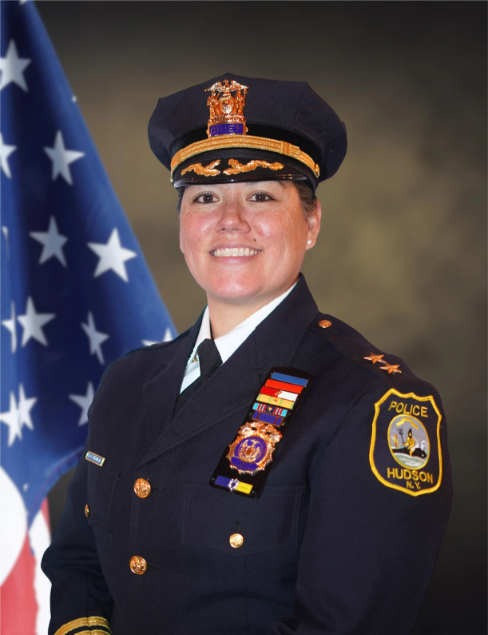
Mishanda begins the interview by talking about her early years in Hudson on State Street and attending John L. Edwards Elementary School. Her biological mother is white and her biological father is Black and both were incarcerated at various times in her youth. She describes being White-passing, and identifying as both Black and Biracial. Due to racism in her mother’s family, she was placed up for adoption at birth and adopted by her father’s religious family, who are Jehovah’s Witnesses. Raised by a family of strong Black women matriarchs, she helped her family with cooking and serving meals to people in need. Her biological parents both died in her youth, and her adopted mother died when she was a teenager.

Mishanda left for college in Arizona, and later transferred to New York University (NYU). While at NYU, she was impacted by 9/11 and decided to leave school to pursue becoming a police officer after witnessing the impact of first responders. She discusses challenges of passing the police academy, overcoming the perception of female police officers as fragile, self-care and care for police officers via a K-9 therapy program she initiated, parenting and policing, the importance of listening, shifting negative perceptions of police officers through positive interactions, reducing trauma, showing up for community, power, police discretion, and police accountability and transparency in Hudson following George Floyd’s death in 2020.

She joined the Hudson Police Department in 2003 and later became Hudson’s first Black Chief of Police in 2023.

Themes:
No items found.
Interviewer Bio:
Crystal Z Campbell

Crystal Z Campbell is a visual artist, experimental filmmaker, and writer of Black, Filipinx, and Chinese descents. Campbell exhibits and screens their work around the “underloved” internationally, and is currently an Associate Professor of Art and Media Study at the University at Buffalo and Visiting Professor at Bard’s MFA Program in Art.

Additional Info:
Interview language(s):
English
,
Audio quality:

Audio Quality Scale

Low - There is some background noise and the narrator is hard to hear.

Medium - There is background noise, but the narrator is audible.

High - There is little background noise and the narrator is audible.

Permissions: 

This interview is hereby made available for research purposes only. For additional uses (radio and other media, music, internet), please click here to inquire about permissions.

Part of this interview may be played in a radio broadcast or podcast.

Oral history is an iterative process. In keeping with oral history values of anti-fixity, interviewees will have an opportunity to add, annotate and reflect upon their lives and interviews in perpetuity. Talking back to the archive is a form of “shared authority.”

Is this your interview?
Click here
to leave updates or reflections on your life, your interview or your listening experience.
Thank you! Your submission has been received!
Oops! Something went wrong while submitting the form.