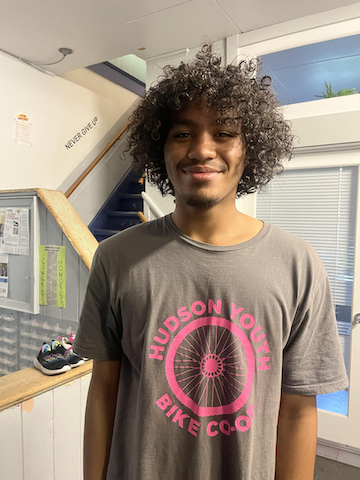
This oral history interview is an intimate conversation between two people, both of whom have generously agreed to share this recording with Oral History Summer School, and with you. Please listen in the spirit with which this was shared.

This interview is hereby made available for research purposes only. For additional uses (radio and other media, music, internet), please inquire about permissions.

All rights are reserved by Oral History Summer School.

Researchers will understand that:

  • Oral History Summer School abides by the General Principles & Best Practices for Oral History as agreed upon by the Oral History Association (2018) and expects that use of this material will be done with respect for these professional ethics.
  • Unless verbal patterns are germane to your scholarly work, when quoting from this material researchers are encouraged to correct the grammar and make other modifications maintaining the flavor of the narrator’s speech while editing the material for the standards of print.
  • All citations must be attributed to Oral History Summer School:
    Narrator’s Name, Oral history interview, YYYY, Oral History Summer School
Library

Max Cruz

June 28, 2925

|

Hudson, NY

Song

Recorded by

Emma York

This interview is available in-person only. Please get in touch if you would like to listen.
Is this your interview?
Click here to respond.
x
Summary:

This interview was conducted with Max Cruz at the Hudson Youth Center in Hudson, NY, where he spends much of his time, on Saturday, June 28, 2025, as part of Oral History Summer School. Max is a Junior at Hudson High School who recently moved to Hudson, NY from The Bronx, NYC last July. He quickly acclimated to and became involved in the Hudson community. Throughout his interview, Max expressed deep gratitude for the resources he has been able to access, the skills he has been able to build, and the new experiences, perspectives, and people he’s been able to interact with since moving.

Max described the differences between The Bronx and Hudson, NY, as well as the way the transition has changed him. Although he misses NYC, he believes moving was good for him because some of his peers in The Bronx got caught in cycles of poverty, gang violence, and drug use he didn’t want to be a part of. He noted that Hudson’s calmness allows for greater accountability and integrity but can make it difficult to find acceptance as a newcomer. Max explained how working as a junior mechanic at the Bike Co-Op helped him build connections and discipline, a quality he’s also developed through football and hopes to further hone in the military.

Max described why he feels at home at the Hudson Youth Center and how he’s used the space to make new friends, take lessons, get homework help, and apply to jobs. He discussed his admiration for his employer Erin at the Bike Co-Op and how his brother now wants to follow in his footsteps. Max shared that his wildest dream for young people in Hudson is for them to have access to more resources, like a rec center or skating rink, and explained how his family’s involvement in the Army has influenced his desire to join the military and become a therapist or psychiatrist. He looks forward to starting a new job as a camp counselor at Oakdale this summer, where he’ll work alongside his cousin. This interview might be of interest to someone curious about push factors for people leaving NYC, the experiences of young people of color in Hudson, and the value of safe spaces and job opportunities for youth.

Themes:
No items found.
Interviewer Bio:
Emma York

Emma York, 28, is a white woman from a working-class, multicultural city in the Northeast. A graduate of a large urban public high school, she became a 7th/8th grade Humanities teacher to help young people see themselves as agents of change. She served on the Reimagining New England Histories Curriculum Committee, collaborating with Indigenous leaders and educators to recover Black and Indigenous histories in K–12 education. Emma holds a BA in English & Africana Studies from Williams College and an MA in Teaching from Brown University.

She is now Associate Director of Education and Community at the Zeiterion Performing Arts Center and Project Manager for Casting a Wider Net, a multilingual oral history project at the New Bedford Fishing Heritage Center that trained community members to interview local people in the fishing industry and co-create a traveling exhibit. An oral historian, educator, and public programmer, Emma curates spaces for deep listening to one another and to history’s silences. Her interests include immigration, labor, diasporic identity, rest, resistance, and joy—and though she never learned to ride a bike, Max’s enthusiasm for the Bike Co-Op may finally inspire her to learn.

Additional Info:
Interview language(s):
English
,
Audio quality:

Audio Quality Scale

Low - There is some background noise and the narrator is hard to hear.

Medium - There is background noise, but the narrator is audible.

High - There is little background noise and the narrator is audible.

Permissions: 

This interview is hereby made available for research purposes only. For additional uses (radio and other media, music, internet), please click here to inquire about permissions.

Part of this interview may be played in a radio broadcast or podcast.

Oral history is an iterative process. In keeping with oral history values of anti-fixity, interviewees will have an opportunity to add, annotate and reflect upon their lives and interviews in perpetuity. Talking back to the archive is a form of “shared authority.”

Is this your interview?
Click here
to leave updates or reflections on your life, your interview or your listening experience.
Thank you! Your submission has been received!
Oops! Something went wrong while submitting the form.