This oral history interview is an intimate conversation between two people, both of whom have generously agreed to share this recording with Oral History Summer School, and with you. Please listen in the spirit with which this was shared.
This interview is hereby made available for research purposes only. For additional uses (radio and other media, music, internet), please inquire about permissions.
All rights are reserved by Oral History Summer School.
Researchers will understand that:


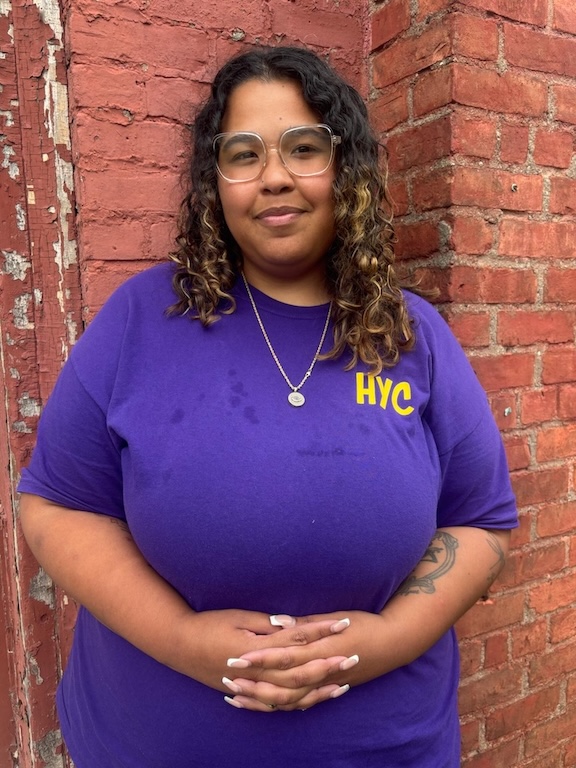
This interview was with Jenna Castillo at the Hudson Youth Center on June 27, 2025. Jenna is the secretary at the youth center and has two children who participate in programming there.
Jenna shares how the youth center has connected her and her kids to other families in Hudson who have shown them support and given them a sense of belonging. She highlighted a lack of programming for kids with special needs in Hudson and how the youth center has provided for her children and other families in the area. Her kids have been involved with basketball and soccer at the youth center, swimming lessons, Oakdale summer camp and more.
Jenna lived in Hudson between 2017 and 2019, then moved to Brooklyn and Long Island. She returned to Hudson in 2021. She shared about changes she’s noticed in Hudson since moving back and challenges related to affordable housing and rising living costs. She said she would like to see more voices included in affordable housing conversations and more housing options.
This interview may be of interest to those who are interested in the impact the youth center has on parents and children, post pandemic family life in Hudson, the rewards and challenges of raising a family in Hudson, and how to include more perspectives in affordable housing solutions.
Olivia Weitz is a public radio journalist and oral historian. She works out of a radio studio in Cody, WY, based at the Buffalo Bill Center of the West, a Smithsonian affiliate museum and research library. Her work focuses on the art, natural history and cultures of the American West. She is a deep listener who seeks to provide spaces where people can share their own story in their own words.
Oral history is an iterative process. In keeping with oral history values of anti-fixity, interviewees will have an opportunity to add, annotate and reflect upon their lives and interviews in perpetuity. Talking back to the archive is a form of “shared authority.”