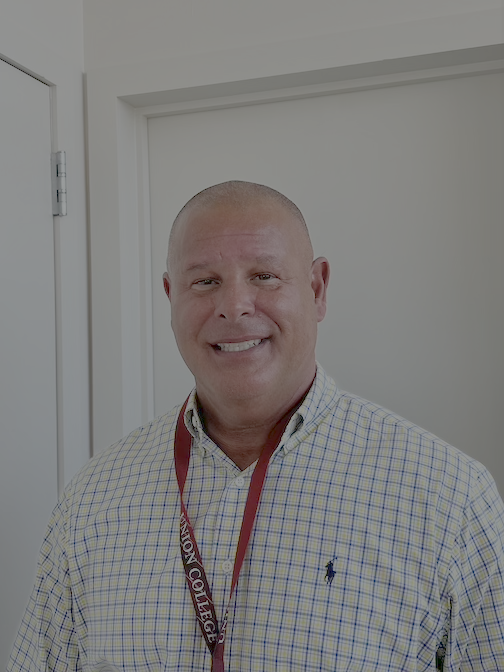
This oral history interview is an intimate conversation between two people, both of whom have generously agreed to share this recording with Oral History Summer School, and with you. Please listen in the spirit with which this was shared.

This interview is hereby made available for research purposes only. For additional uses (radio and other media, music, internet), please inquire about permissions.

All rights are reserved by Oral History Summer School.

Researchers will understand that:

  • Oral History Summer School abides by the General Principles & Best Practices for Oral History as agreed upon by the Oral History Association (2018) and expects that use of this material will be done with respect for these professional ethics.
  • Unless verbal patterns are germane to your scholarly work, when quoting from this material researchers are encouraged to correct the grammar and make other modifications maintaining the flavor of the narrator’s speech while editing the material for the standards of print.
  • All citations must be attributed to Oral History Summer School:
    Narrator’s Name, Oral history interview, YYYY, Oral History Summer School
Library

Dan Grandinetti

June 30, 2025

|

Hudson, NY

Song

Recorded by

Daniel Jin

This interview is available in-person only. Please get in touch if you would like to listen.
Is this your interview?
Click here to respond.
x
Summary:

This interview with Dan Grandinetti was conducted on June 30, 2025, at the Spark of Hudson building in Hudson, New York. Grandinetti was born in Hudson in 1967 and grew up on lower Union Street. Both his parents, John and Gail Grandinetti, spent time representing the First Ward on the Board of Supervisors. Dan represented the Third Ward before becoming the city’s Youth Commissioner in 2004. Later moving to Schodack, he spent 33 years working for the New York Office of Children and Family Services and now serves as executive director of the Columbia County Youth Bureau.

One of four brothers, Grandinetti describes the importance of family and sports in his early years. He shares memories of spending time at the Boys and Girls Club and St. Mary’s playground, working at Oakdale Lake and the skating rink, and playing football at Hudson High School, where he graduated in 1986. Grandinetti discusses his interest in city politics and his work as Youth Commissioner after the city took over the Boys and Girls Club, which became the Hudson Youth Center. He explains his vision for shifting public funding toward youth, arguing that investing in youth can keep them out of the criminal justice system, reducing future law enforcement expenditures. He identifies some role models who supported him as a young man and describes recent efforts by nonprofits and government agencies to bolster youth programming in Hudson.

This interview may be of interest to listeners who would like to learn about city government, the Hudson Youth Center (formerly the Boys and Girls Club), youth experiences in Hudson, and demographic and economic changes in Columbia County.

Interviewer Bio:
Daniel Jin

Daniel Jin is a PhD candidate in the Department of American Culture at theUniversity of Michigan, Ann Arbor, where he researches twentieth-century U.S.immigration and urban history. He previously worked for The Berkshire Eagle and Report for America, covering Massachusetts politics and local news in the town of Adams. He is the son of Chinese immigrants and a 2020 graduate of Williams College.

Additional Info:
Interview language(s):
English
,
Audio quality:
medium

Audio Quality Scale

Low - There is some background noise and the narrator is hard to hear.

Medium - There is background noise, but the narrator is audible.

High - There is little background noise and the narrator is audible.

Permissions: 

This interview is hereby made available for research purposes only. For additional uses (radio and other media, music, internet), please click here to inquire about permissions.

Part of this interview may be played in a radio broadcast or podcast.

Oral history is an iterative process. In keeping with oral history values of anti-fixity, interviewees will have an opportunity to add, annotate and reflect upon their lives and interviews in perpetuity. Talking back to the archive is a form of “shared authority.”

Is this your interview?
Click here
to leave updates or reflections on your life, your interview or your listening experience.
Thank you! Your submission has been received!
Oops! Something went wrong while submitting the form.