This oral history interview is an intimate conversation between two people, both of whom have generously agreed to share this recording with Oral History Summer School, and with you. Please listen in the spirit with which this was shared.

This interview is hereby made available for research purposes only. For additional uses (radio and other media, music, internet), please inquire about permissions.

All rights are reserved by Oral History Summer School.

Researchers will understand that:

  • Oral History Summer School abides by the General Principles & Best Practices for Oral History as agreed upon by the Oral History Association (2018) and expects that use of this material will be done with respect for these professional ethics.
  • Unless verbal patterns are germane to your scholarly work, when quoting from this material researchers are encouraged to correct the grammar and make other modifications maintaining the flavor of the narrator’s speech while editing the material for the standards of print.
  • All citations must be attributed to Oral History Summer School:
    Narrator’s Name, Oral history interview, YYYY, Oral History Summer School
Library

Caitie Hilverman

June 27, 2025

|

Hudson, NY

Song

Recorded by

Amy Keegan Safranek

This interview is available in-person only. Please get in touch if you would like to listen.
Is this your interview?
Click here to respond.
x
Summary:

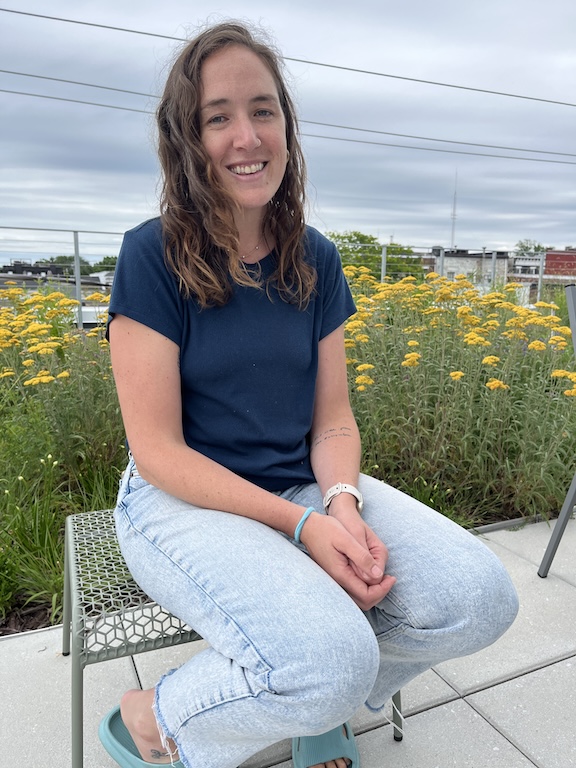
This interview with Dr. Caitie Hilverman was conducted on June 27, 2025 at the Spark of Hudson, where she serves as Executive Director. Caitie is a sibling, mother, partner, writer, scientist, community leader, and daughter of five generations of family in Hudson, NY. She reflects on her upbringing and the importance of Oakdale Park, the Hudson Youth Center, and Cedar Park Cemetery in her childhood. She recalls a formative high school memory when her mother and other residents rallied to restore arts, music, and athletics after a failed school budget vote. Caitie shares her experience living away from Hudson, the loneliness of being elsewhere, and her decision to return home, driven by a hope for a Hudson where everyone has what they need and the opportunity to stay.

She discusses her blog, All My Dead and Living Things, a writing project that brings her energy and connection to the community. Caitie also reflects on the loss of her stepfather, Don, and how caring for gravestones at Cedar Park Cemetery has become a way to honor her grief and connect with her ancestors. Throughout the conversation, she speaks about memory, community care, and belonging.

This interview may interest those curious about life in Hudson, community organizing, parenting, grief and remembrance, embodiment, writing, and envisioning a just and connected future for Hudson.

Themes:
No items found.
Interviewer Bio:
Amy Keegan Safranek

AmyKeegan Safranek is a white, queer, non-binary person. They live with their partner and two cat family members in Los Angeles, CA. Amy is currently beginning their journey to become a death/grief worker and is launching a project to create a listening and witnessing space for dying and grieving people to share stories that matter to them. Amy is a facilitator and community builder in progressive organizing spaces. They are passionate about creating spaces where people feel more human. In life outside of work, they love reading, creating art, writing letters, listening to music, and going for walks in their neighborhood in Northeast Los Angeles. Amy has had a book club with their sister for over a decade and it is one of their greatest joys.

Additional Info:
Interview language(s):
English
,
Audio quality:
medium

Audio Quality Scale

Low - There is some background noise and the narrator is hard to hear.

Medium - There is background noise, but the narrator is audible.

High - There is little background noise and the narrator is audible.

Permissions: 

This interview is hereby made available for research purposes only. For additional uses (radio and other media, music, internet), please click here to inquire about permissions.

Part of this interview may be played in a radio broadcast or podcast.

Oral history is an iterative process. In keeping with oral history values of anti-fixity, interviewees will have an opportunity to add, annotate and reflect upon their lives and interviews in perpetuity. Talking back to the archive is a form of “shared authority.”

Is this your interview?
Click here
to leave updates or reflections on your life, your interview or your listening experience.
Thank you! Your submission has been received!
Oops! Something went wrong while submitting the form.