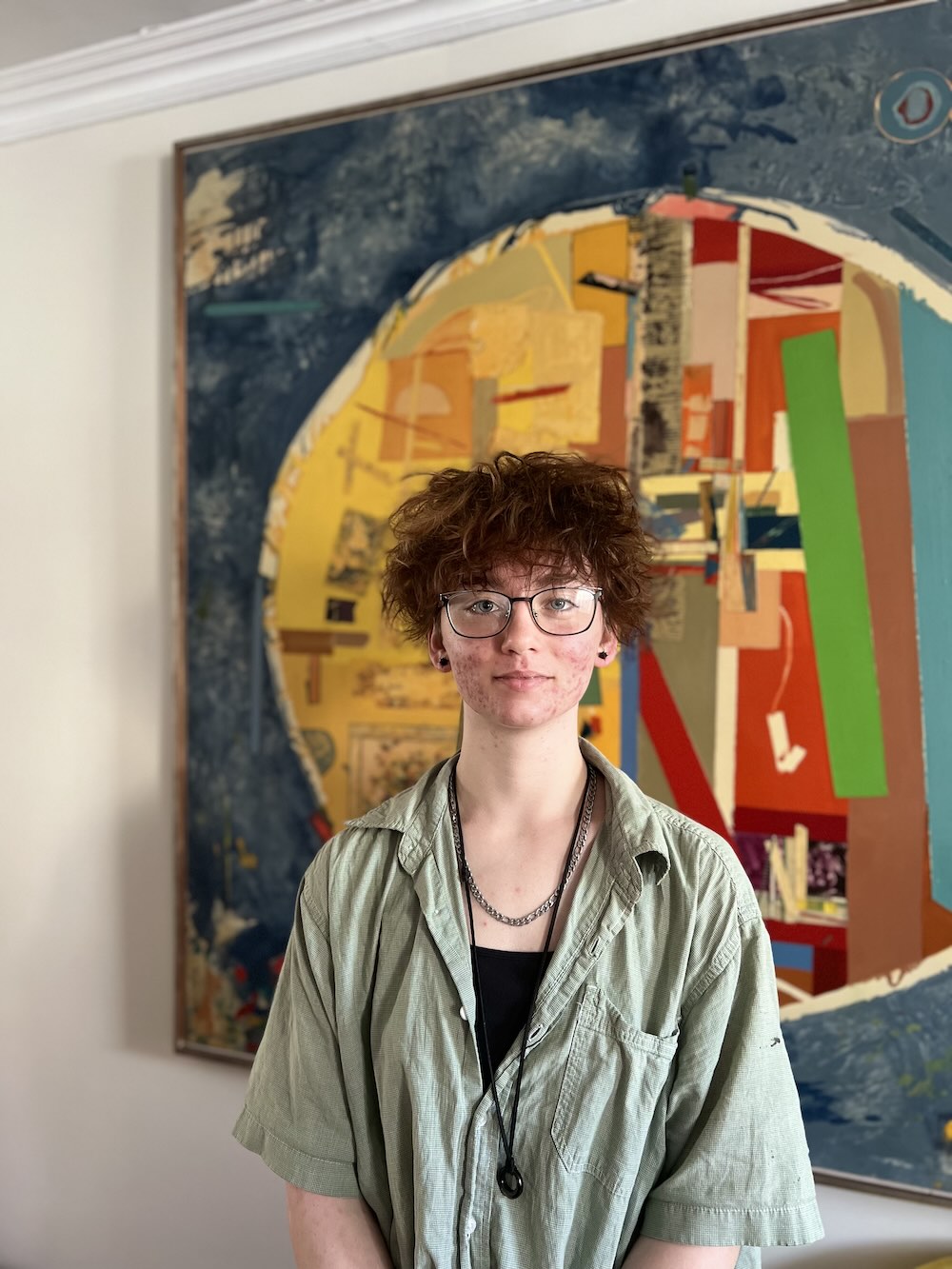
This oral history interview is an intimate conversation between two people, both of whom have generously agreed to share this recording with Oral History Summer School, and with you. Please listen in the spirit with which this was shared.

This interview is hereby made available for research purposes only. For additional uses (radio and other media, music, internet), please inquire about permissions.

All rights are reserved by Oral History Summer School.

Researchers will understand that:

  • Oral History Summer School abides by the General Principles & Best Practices for Oral History as agreed upon by the Oral History Association (2018) and expects that use of this material will be done with respect for these professional ethics.
  • Unless verbal patterns are germane to your scholarly work, when quoting from this material researchers are encouraged to correct the grammar and make other modifications maintaining the flavor of the narrator’s speech while editing the material for the standards of print.
  • All citations must be attributed to Oral History Summer School:
    Narrator’s Name, Oral history interview, YYYY, Oral History Summer School
Library

Aullie Allen

May 26, 2026

|

Hudson, NY

Song

Recorded by

Armando Estrada

This interview is available in-person only. Please get in touch if you would like to listen.
Is this your interview?
Click here to respond.
x
Summary:

Aullie was interviewed by Armando Estrada on May 26, 2026, in Hudson, New York, as part of the Oral History Summer School 2026 cohort. Aullie grew up in southern Ohio in a large, close-knit family and describes their home as a “revolving door,” with their mother, siblings, extended family, friends, and partners constantly coming and going. As the eldest daughter, Aullie took on significant responsibility for caring for their younger siblings and helping support the household from a young age, experiences that shaped their strong sense of responsibility, productivity, and anxiety. They speak warmly about their grandmother, and about their father, who taught them to cook and connected them to Mexican culture through food, language, and family traditions, while also discussing their complicated relationship with another father figure who was incarcerated. Aullie recalls growing up surrounded by agricultural land but experiencing food insecurity, an experience that, alongside cooking with Alejandro and a college course on food inequality, led to their interest in agriculture, environmental geography, and food systems. They hope to pursue work or graduate study focused on connecting farmers, sustainable agricultural practices, policy, and oral history to address food deserts and food injustice. Aullie also discusses their academic path from a challenging early experience in school to earning a full scholarship to Colgate University, where research involving archives and interviews led them to Oral History Summer School. Outside academics, they describe discovering theater technology in high school and becoming a lighting designer, as well as working long hours at a family-owned pizza shop. Throughout the interview, Aullie reflects on how early caregiving shaped their relationships and sense of self, and on learning, after leaving home for college, that they can support the people they love without being responsible for them.

Themes:
No items found.
Interviewer Bio:
Armando Estrada
Additional Info:
Interview language(s):
English
,
Audio quality:

Audio Quality Scale

Low - There is some background noise and the narrator is hard to hear.

Medium - There is background noise, but the narrator is audible.

High - There is little background noise and the narrator is audible.

Permissions: 

This interview is hereby made available for research purposes only. For additional uses (radio and other media, music, internet), please click here to inquire about permissions.

Part of this interview may be played in a radio broadcast or podcast.

Oral history is an iterative process. In keeping with oral history values of anti-fixity, interviewees will have an opportunity to add, annotate and reflect upon their lives and interviews in perpetuity. Talking back to the archive is a form of “shared authority.”

Is this your interview?
Click here
to leave updates or reflections on your life, your interview or your listening experience.
Thank you! Your submission has been received!
Oops! Something went wrong while submitting the form.