This oral history interview is an intimate conversation between two people, both of whom have generously agreed to share this recording with Oral History Summer School, and with you. Please listen in the spirit with which this was shared.
This interview is hereby made available for research purposes only. For additional uses (radio and other media, music, internet), please inquire about permissions.
All rights are reserved by Oral History Summer School.
Researchers will understand that:


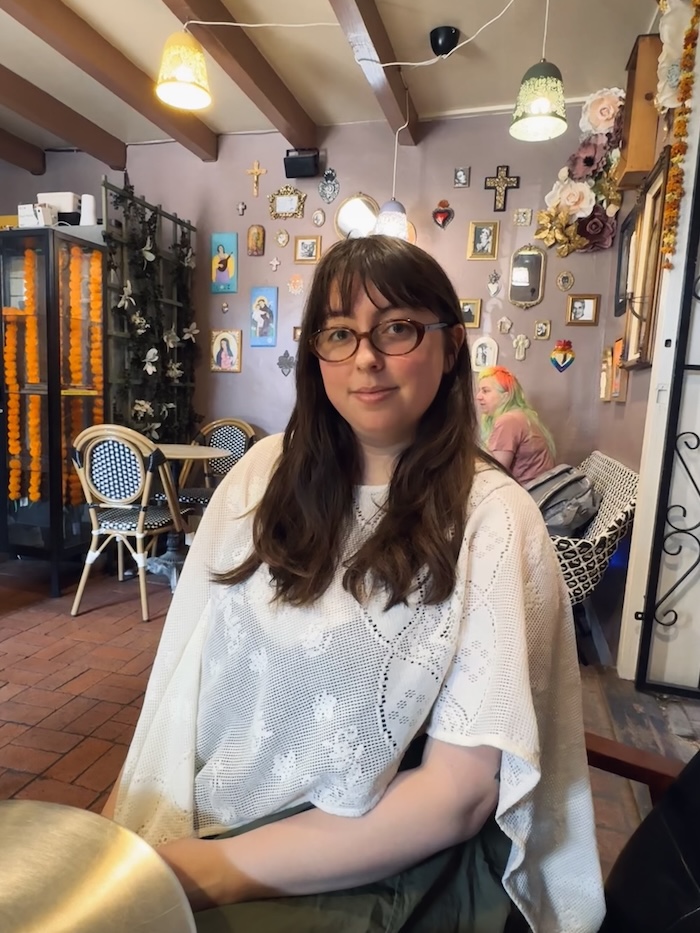
Amiel Katz was interviewed by Sofie Seymour on May 26, 2026, in Hudson, New York, as part of Oral History Summer School. Amiel, a poet, teacher, and historian, reflects on growing up in Houston, Texas, and later moving to Boston, where distance from her family gave her space to explore her identity, values, and relationships to community. She discusses her love of outdoor activities including hiking, rock climbing, ice climbing, and mountaineering, and describes nature as an important source of perspective and well-being. Amiel speaks about her Jewish upbringing, her evolving relationship to religion and spirituality, and her understanding of ancestry as connected not only to family but also to the histories of the places where she lives. She discusses her work as a historian researching Black and Latino communities around Boston and her interest in borders, migration, and the ways institutions and geography shape communities. Amiel also reflects on experiences with the mental health care system and the importance of reducing stigma around mental illness. In the second half of the interview, she discusses discovering poetry through a class with Tracy K. Smith, her chapbook Chasing Salvation, and a planned Choose Your Own Adventure-style poetry book exploring migration and borders across different historical periods. She describes teaching poetry at South Bay Jail in Boston and her longer history as a teacher, including working with people with disabilities and teaching advocacy writing. Looking toward the future, Amiel plans to pursue an MFA in poetry where she hopes to develop an oral history project about queer and trans communities while continuing to write, teach, and build a life centered on community, creativity, and a sense of belonging.
Oral history is an iterative process. In keeping with oral history values of anti-fixity, interviewees will have an opportunity to add, annotate and reflect upon their lives and interviews in perpetuity. Talking back to the archive is a form of “shared authority.”